How does your response to Sassoon’s “On Passing the New Menin Gate” make you reassess your reaction to war memorials in your own country? Try to be as honest as you can about this.
Siegfried Sassoon
Author and War Veteran
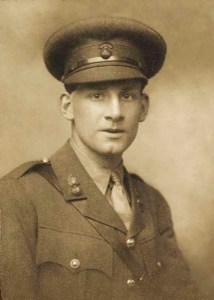
My perceptions and views of war memorials have always been one of a sacred nature and a peaceful space, where we respect those that have lost their lives. I have always perceived these spaces to be an opportunity to show remorse towards those that have fallen to war, so to witness a war veteran criticize this space was quite shocking. However, I cannot refute many of the claims made to the space made for those who have gone through the ‘Gate’.
The first stanza is provocative in challenging whether the war memorial set in place will actually serve its purpose in remembrance. In commemoration to the “victorious ones” soldiers placed thousands of names are engraved intended for those that have no grave. And yet, I cannot dismiss Sassoon’s question, but rather confirm these anxieties as I who have visited war memorials in commemoration of Anzac Day, or even as an excursion in school cannot remember as single name in all my times visiting these memorials.
When initially reading the second stanza, I assumed that Sassoon was even ridiculing the “dim defenders” who gave their lives, which I found to be quite aggravating. Though now in hindsight I realize that he is criticizing the memorial itself. Those that are supposed to be remembered for fighting are instead relegated to a “peace-complacent stone”, is his disdain for country paying back their defenders.
The third stanza made me realize that Sassoon as a war veteran did not perceive these memorial spaces as a place that truly respects what these “dim defenders” went through. Sassoon had felt that instead of truly reflecting the atrocities that came from war, these war memorials had only romanticized it, holding it with ‘pride’.
Upon realizing this grievance my perception of war memorials had changed. I realized that these “dim defenders” entered the war with a nationalistic view in mind for the patronage of their country, a heroic deed. Men as young as 12 entered these ‘sullen swamps’ unaware of what was their ‘immolation’. Oblivious to the graves they buried they were seduced by their pomp. Sassoon is perhaps the most reflective of these “dim defenders”, only difference being his survival to the fallen plastered on the “peace-complacent stone”.
Hence, my perception of Sassoon’s “On Passing the New Menin Gate” has altered my perception of war memorials, from sacred and reverent, to that of parody and mockery to those that are fallen. Sassoon wished that the atrocities of war would be acknowledge rather than the romanticized glorified rendition presented. With all the men that are named, none of which will ever properly be remembered. War memorials in consequence serve no other purpose then to glorify the ‘world’s worst wound’ oblivious to its ignorance.
 Dylan Versola
Leave a comment