Summative Entry

The Nineteenth Century gives me real insights into human and social issues that are still current in the 21st century. 

Throughout this unit, through blogging many mediums that explore into the 19th century literature has taught me insight about the social issues that prevailed during its time. From the prominent issues that plagued the 19th century such as the development of industrialization and political debate. Henceforth, this resulted in a number of human and societal issues. Developments of utilitarian mentalities became prevalent leading to the rejection of emotion due to the domineering societal matters. This led to a range of historical movements that involved revolutionary social change and reformation. However, this utilitarian mindset has reappeared and remains prevalent in the 21st century. 

For my first blog, is an argumentative piece disagreeing with Dorothy Wordsworth’s criticism of Samuel Taylor Coleridge’s domestic lifestyle suggesting he abandon it, in exchange for adventures witnessing nature.  In my argument, I disagreed with the extremities that Wordsworth suggests in abandoning his domestic life, arguing that the working people relate to Coleridge’s focus on the everyday would be lost. Coleridge’s poetry influences the working class through its relatability in striving for the better, in wanting revolution. I believe this relatability and self-reflection is relevant to the 21st century in reaching the people to strive for a better future, from those that are oppressed by modern industrialisation. 

In my second blog, I explore the philosophy and teachings of the Romantics that opposed the 19th century society by self-reflecting of “Expostulation and Reply” a poem by William Wordsworth’s. In this poem, Wordsworth suggests that a phenomenon that can only be captured through nature, which he describes as “wise passiveness”. Wordsworth argues this “wise passiveness” cannot be achieved through man-made constructions. In my blog, I personally self-reflect, phenomenon by reconnecting my spirituality with nature, appreciating its aesthetic natural beauty. By doing so, I better understand that “wise passiveness” is not something learnt, but it can only be experienced in bonding with nature, emphasising the importance of remaining connected with nature. Through this blog of self-reflection, I, someone in from the 21st century have gained insight towards what the Romantics hoped human beings in industrialised logic driven society would realise they were missing in their dissonance with nature. 

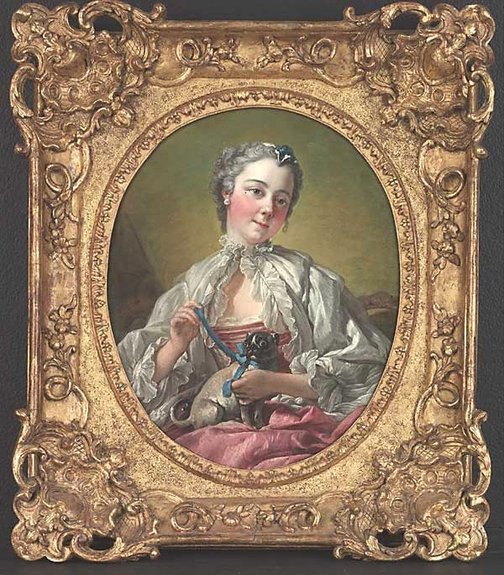
The third blog portrays the values instilled during the enlightenment era, that the Romantics countered seen in ‘A Young Lady Holding a Pug Dog’ by Francis Boucher. I discuss the how the portrait portrays the values of the hierarchical status juxtaposed to the Romantic’s focus on the divinity of nature. This Romantic belief that humanity should connect with nature to stimulate the mind, is a notion that I believe contemporary society has been long forgotten. In this blog, I reflect upon the values of the enlightenment and refer to 21st centuries current value in higher wealth, class and celebrity obsession, will bring happiness. As well as the natural resources that are exploited I emphasis with what the Romantics considered an issue in the 19th century and a continuing issue in modern society, in needing to remind people that interacting with nature is a necessity for thriving society and a fulfilling life. 

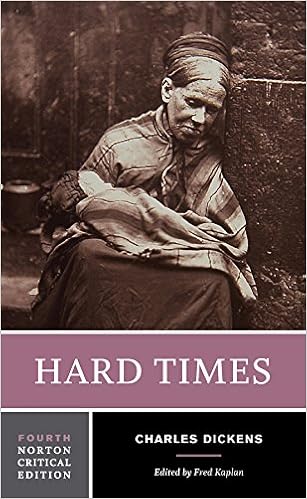
My fourth and final blog is a letter to Charles Dickens’ character Louisa Gradgrind from ‘Hard Times’ where I sympathize with what has the cause and consequences of what’s happened in her life.  The novel explores how humanities obsession with factual information, and compassion and modesty have lost value with detrimental consequences. This is most prevalent with Louisa Gradgrind’s factual upbringing that has caused severe social issues with her inability to comprehend and understand the feelings of herself and others. This idea that in our modern society the media we consume is obsessed with “facts” is still enforced through the media we consume. Delving into ‘Hard Times’, a book regarding the 19th century has made me realised the consequences that come from depriving one of their imagination and emotions. Comes with detrimental consequences that deprives humanity of their potential. 

In conclusion, the exploration of societal issues of that the Romantics opposed in the 19th century has made me more sensitive towards the problems that remain significant in the 21st century. We are more than ever obsessed with wealth, ‘aristocracy’ and technology adhering to a industrialised society that exploits the power nature instead of respecting. These social issues are reflected in many modern societal and human issues that can be reflected to the 19th century. 
3/ Peer Review

Jessica Aramini

Hi Jessica, I thought your blog on “An Extensive Landscape near Paris” by Hubert Robert was well executed. I liked how you explored the themes of the painting and provided an explanation as to what the Romantics valued and correlating it to the subject matter towards the selected painting. It really establishes your literary understanding of the core concepts of Romanticism and their connections with nature. The only suggestion I would make is when you are reflecting on why this painting makes the strongest impression to you, would be to include a contrast to the simple life with your city life contrasting Enlightenment’s values to the romantics. This would allow the reader to better understand how the painting resonates with you. Nevertheless, I am excited to read your future blogs, and I enjoyed reading this one.

4/ Creative Blog

3/ Write a letter to Louisa Gradgrind trying to make her feel better for what has happened to her in her life. 

Dear Louisa Gradgrind,  

I pity you, on the difficulties you’ve faced in enduring a lack of imagination and humanity that has been a result of your father’s instilment of always sticking to the facts. It became apparent to me that your father had instilled this mentality onto you at a young age. As you had once at a young age been curious about the world around you, to only be told that you must ‘never wonder’ (Dickens, Hard Times, Book 1, Chapter 5). In consequence, to this instilment, your father’s teachings have rendered you, a broken cog, devoid of any childhood experience, unable to express yourself.

Signs of your emotional detachment to yourself is continued when you are unable to express yourself, instead factually describing your surroundings, “There seems to be nothing there but languid and monotonous smoke. Yet when the night comes, Fire bursts out.”, describe the emotions suppressed within you (Dickens, Book 1, Chapter 15). You resort to these factual descriptions because you are detached from the intense feeling beneath your cold monotonous exterior.  

However, whilst you show an inability to understand your emotions, you have the grandeur to realise they exist and hold more significance, then your father could comprehend. I pity your frivolous temptation of a love affair, that ruins your marriage. However, I praise you for the sense of virtue in stopping your ruinous affair, saving your reputation. As you realise the temptations you have of an affair with John Harthouse, instead of acting dishonourably, you respond by fleeing to your father’s house. Furthermore, your confrontation with your father has made him aware of the inefficiencies of his teachings, instead, you ask him to prevent yourself from pursuing your unsettling emotional desires. The lines, “I do not know that I am sorry, I do not know that I am ashamed, I do not know that I am degraded in my own esteem. All that I know is, your philosophy and your teaching will not save me. Now, father, you have brought me to this. Save me by some other means! “ (Dickens, Book 2, Chapter 12).  

You express your emotional dissonance with yourself unable to comprehend the shame or temptation you feel in having an affair. Whilst the circumstances are not favourable, you have demonstrated the ability to recognise good and right from wrong, even when it does not fall upon your father’s teachings, knowing to differentiate these emotions. Thus, your sense of virtue has prevented your life from being ruined by going to your father’s house, rather than eloping with Harthouse, saving your reputation and life from an irreparable state. I truly wish the best for you and hope that your virtue can help in allowing you to reconnect with your sense of self and repair the cog that prevents you from expressing your emotions. 

With the best of regards, Dylan Versola 

Dickens, Charles. Hard Times, Fourth Norton Critical Edition. New York: Norton, 2001.

Image from https://www.booktopia.com.au/hard-times-charles-dickens/book/9780393284386.html

3/ Critical Blog

1/ Which painting made the strongest impression on you and how did it amplify your understanding of any of the literary themes that we have been exploring. 

French 18th century enlightenment artist, Francis Boucher, and his painting, ‘A Young Lady Holding a Pug Dog’, held the strongest impression for me with its representation of enlightenment ideals. Primarily its core values of upper class, opulence and aristocracy that reminds me of modern society and its materialistic values.  

Boucher’s portrait painting, of an aristocratic lady was painted not long before the French revolution, in an era where many struggled with poverty and yet in this portrait it depicts the priorities of aristocratic women primarily her visual appearance and wealth. Many indicators of her opulence are her attire, consisting of a white dress that those poor would never afford to wear, staining easily in a day’s work. Makeup painting her paler to indicate her never working a day of her life and focusing instead on her beauty. As well as her pug, as in those times dogs would specifically be bred to accommodate to the yearnings of the rich. 

This much of the subject matter of wealth, material things and other values serve as the core belief of enlightenments, that romantics spite instead endorsing a humbler and more connected lifestyle with nature, resonates with me when looking at today’s modern society. Many forms of social media and televised articles with celebrity life place a heavy emphasis towards materialistic items that serve to flex one’s own wealth. Many high-end brands that make a name to promote large spending with many mediums from pop, music and celebrity culture that telling us that buying expensive things is a sign of success. 

I cannot help but make a comparison towards these acts to that of the values that enlightenment that focus on emphasising one’s possessions I cannot help but compare modern society with the enlightenment, and better understand what core values the romantics tried to enforce in spiritual fulfillment with nature then materialistic values of success. 

Image Found: https://www.artgallery.nsw.gov.au/collection/works/118.1992/

2/ Peer Review

Lauren Perry’s blog

Hi Lauren, I thought your blog on Wise passiveness was well done. I believe you provided great explanations and textual evidence, quoting William Wordsworth’s poem “Expostulation and Reply” providing context, of Wordsworth’s circumstances and beliefs that establish the term wise passiveness. This helps in making the reader better understand what Wise passiveness entitles and better resonate with your own personal experience of wise passiveness. The suggestion I would make for this particular blog is that the example you provide in connecting with nature could use a bit more specificity, such as a location/place or moment that causes wise passiveness, especially as we live in the city making it difficult to connect with nature. This would allow the reader to connect more deeply, better understanding what you refer to as moments that allow you to experience wise passiveness. Overall, I thought your blog was about wise passiveness was a nice piece to read. 

1/ Peer Review

Hi Cameron, your blog post about the concerns expressed in Pandaemonium and its relevance to the 21st century was well written. You’ve delved into the film’s contents by exploring and providing insight to the excerpts that stood out to you, being the 19th century rebellion and their political protests. Not only that you’ve contrasted it to modern times by comparing the political protests to the climate change protests taking place today. 

2/ Creative Blog

“Wise Passiveness”- describe a moment in your own life where such a phrase might apply.

Wordsworth’s poem “Expostulation and Reply”, is a response towards his friend’s anti-romantic views attempting to place emphasis that his man-made sources of knowledge and society cannot compare to the experiences of nature.  

Wordsworth’s line “Wise Passiveness” refers to a phenomenon that can only be captured through nature, in our opening towards nature and its offer in what life must show, allowing us to connect with our spirituality.

A moment of wise passiveness for me personally is in the late afternoon in where I soak myself in the crimson sky that glistens amongst the grey, white clouds that float away at their own respective pace. As the clouds move while metamorphosing into different irregular shapes, I take notice of the sun seeping into the landscape as though as its golden radiating light begins to sleep. These unique moments evoke a feeling that cannot be duplicated through, man-made constructions, but by allowing a connection to nature. It is in these moments I appreciate the earth we live in and, I appreciate soak in the emotional connections I feel with nature. 

Wise passiveness cannot be achieved by learning or teachings, through literature, books and education in the societal sense. It is a phenomenon that comes from a more laid-back form of learning, in receiving the world through moments of bonding with nature and life to better understand through experiencing it for one’s self. 

1/ Critical Blog

Are you in agreement with Dorothy Wordsworth’s reactions to S.T. Coleridge’s domestic life? Say why you agree or disagree. 

Dorothy Wordsworth’s criticism of Coleridge’s lifestyle in expanding his poetry through adventures by sacrificing his domestic lifestyle is not something I can fully agree with. Whilst Dorothy may have a point in learning to experience nature rather than resorting to a book towards his poetry. I do not believe it should warrant Coleridge having to sacrifice the entirety of his domestic lifestyle to accommodate towards it, nor Wordsworth’s reaction to it. I believe a balance should be found between what Dorothy challenges and what Coleridge’s domestic lifestyle entails. The extremities of both can lead to complications. Such as, Wordsworth’s domestic lifestyle and poetry leads to his garden having numerous weeds which he praises to which Dorothy chastises as unkempt weeds. However, Coleridge’s writing in relating the common every day that many would relate towards his adversaries towards revolution is a useful asset in getting them to understand their cause, something that Dorothy spites as them needing adventure instead. Dorothy’s suggestion of making him sacrifice his domestic lifestyle could come at the expense of such relatability. For that reason, I believe Dorothy’s reaction towards Coleridge’s Lifestyle is somewhat warranted, I do not fully agree with her rejection of it. 

Summartive Entry

Located in Circular Quay, a statement held by a plaque says “Australia is still revealing itself to us. We oughtn’t to close off possibilities by declaring too early what we have already become”, by Australian Author David Malouf. Malouf expresses the idea that the land and people of Australia hold a plethora of qualities to offer to the world, and should we rush in defining what we already have, we sacrifice the ultimatum to further advance as a country. A response to Malouf was made by David Hurley, the new Governor General (2019); “Australia is not a finished product” adding emphasis towards the hope of a thriving future in establishing the Australian nation. This reverent concept of national persistence and determination in developing Australia’s identity of tenacity and determination is common subject within Australian literature unit. 

Nineteenth century works were part of the semester course reflecting Australia’s evolution from a British colony to a newly developed nation. From excerpts from Louisa Anne Meredith from ‘Notes and Sketches of New South Wales’ (1844), in which she criticises the city of Sydney’s local customs and manners in consequence of attempting to be a faux Britain at the expense of inefficient use of Australia’s natural resources. Banjo Paterson’s ‘Man from Snowy River’ (1890), an idealistic narrative of young newborn Australian native, exceeding the experienced, idolising the Australian outback with themes of mateship, tenacity and determination. Alternatively, Henry Lawson’s ‘Faces in the streets (1888) attempted to present a more dystopian realist perception involving the disadvantaged and suffering of many bushmen that had attempted to find work. I believe that these works at the time reflect the statement “Australia is not a finished product” as they explore the progressive development of Australia from a British colony to a newfound nation at the time in realising Australia’s identity. 

The study of the twentieth century works also presented themes of Australia’s unfinished status of the majority of the remaining semester unit. Works such as Patrick White’s ‘Miss Slattery and her Demon Lover’ (1964), Michael Dransfield ‘Endsight’  (1972) and Peter Skyzynecki ‘Migrant Hostel Parkes’ (1949-51) were curated in evolving times. Social change occurred at the time involving women’s roles in society, the use of drugs, and multiculturalism at the forefront in topics themes pursued in Australian Literature. Social thought and behaviour had evolved again adding weight towards David Hurley’s statement of Australia’s ever-changing nature in many ways through its topics and themes. Many Australian text’s over the years serves as a forewarning towards Australia’s progression that is yet to unveil. 

David Hurley’s interpretation of David Malouf’s statement, “Australia is still revealing itself to us. We oughtn’t to close off possibilities by declaring too early what we have already become” can be correspondent to Hurley’s take, but also can be interpreted in various ways. Personally, I feel that change is inevitable, and with it, will present new opportunities and possibilities all within Australia’s national tenacity. Conceptions of the local-born underdog, mateship of men, and the role of women in society, as well as spectrum of cultures that play a role in the evolution of Australia are all themes worthy of being Australia’s literature. They also serve as a great piece of evidence that “Australia is not a finished product”. 

Design a site like this with WordPress.com
Get started